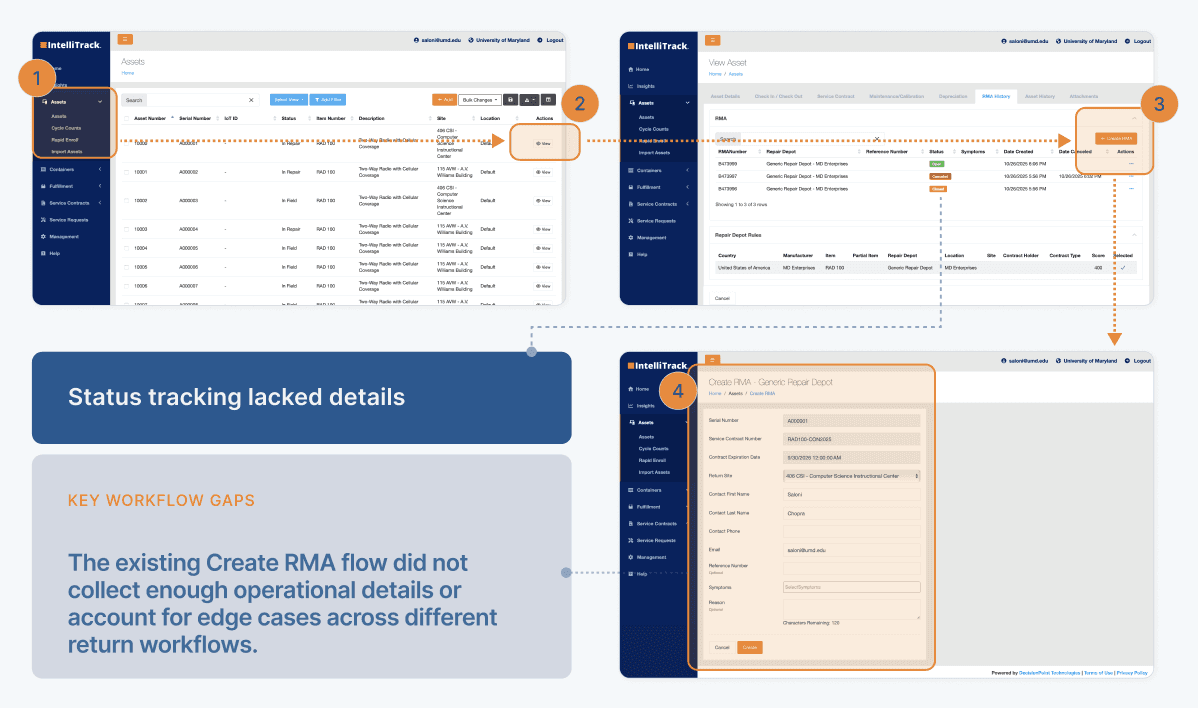
Buried User Flow Entry Points
RMA (Return Material Authorization) creation and history were hidden several layers deep in the system.
Users had to remember where to go instead of finding the workflow easily.
Inconsistent Interaction Patterns
Buttons, tables, forms, tabs, and edit/view flows behaved differently across modules.
Users had to relearn patterns increasing cognitive load during complex tasks.
Limited System Feedback
Required fields, validation rules, and service request constraints were not always clear.
Users feel unsure whether an action was completed, saved, or still processing.
View Full Case Study
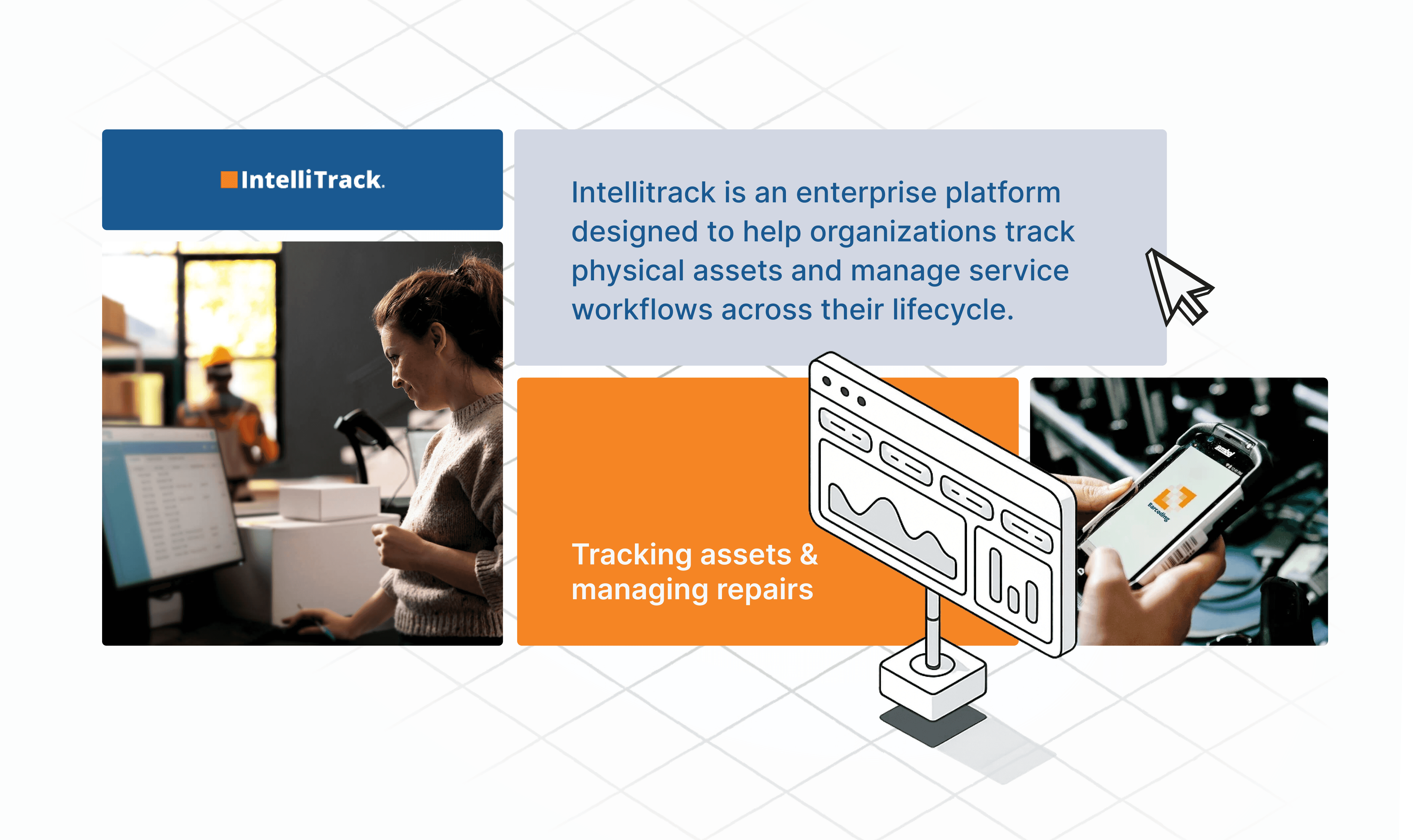
Intellitrack was built for efficiency, but its legacy interface slowed users down. Hidden workflows, inconsistent patterns, and unclear feedback made core asset tasks harder to complete.
Our team conducted multiple research methods, including competitive analysis, internal stakeholder interviews, and user behavior and pattern analysis, all of which led us to identifying key workflows.
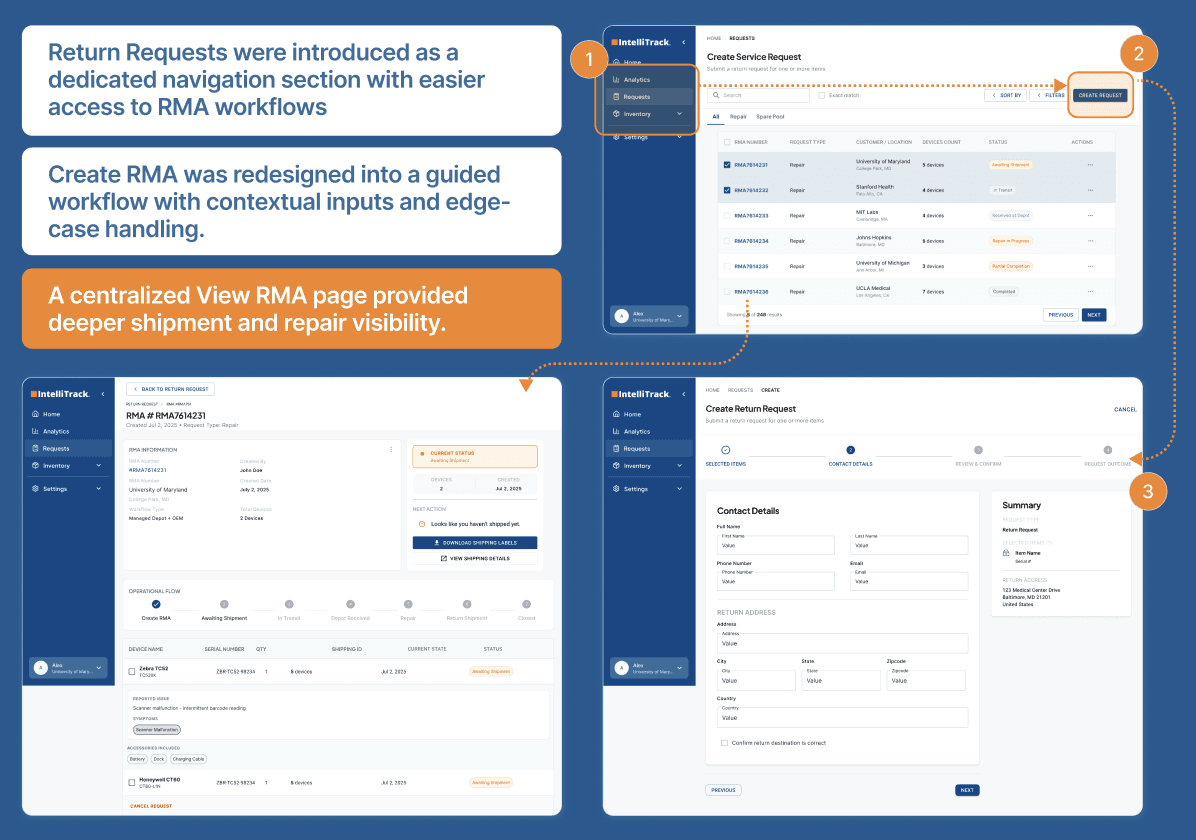
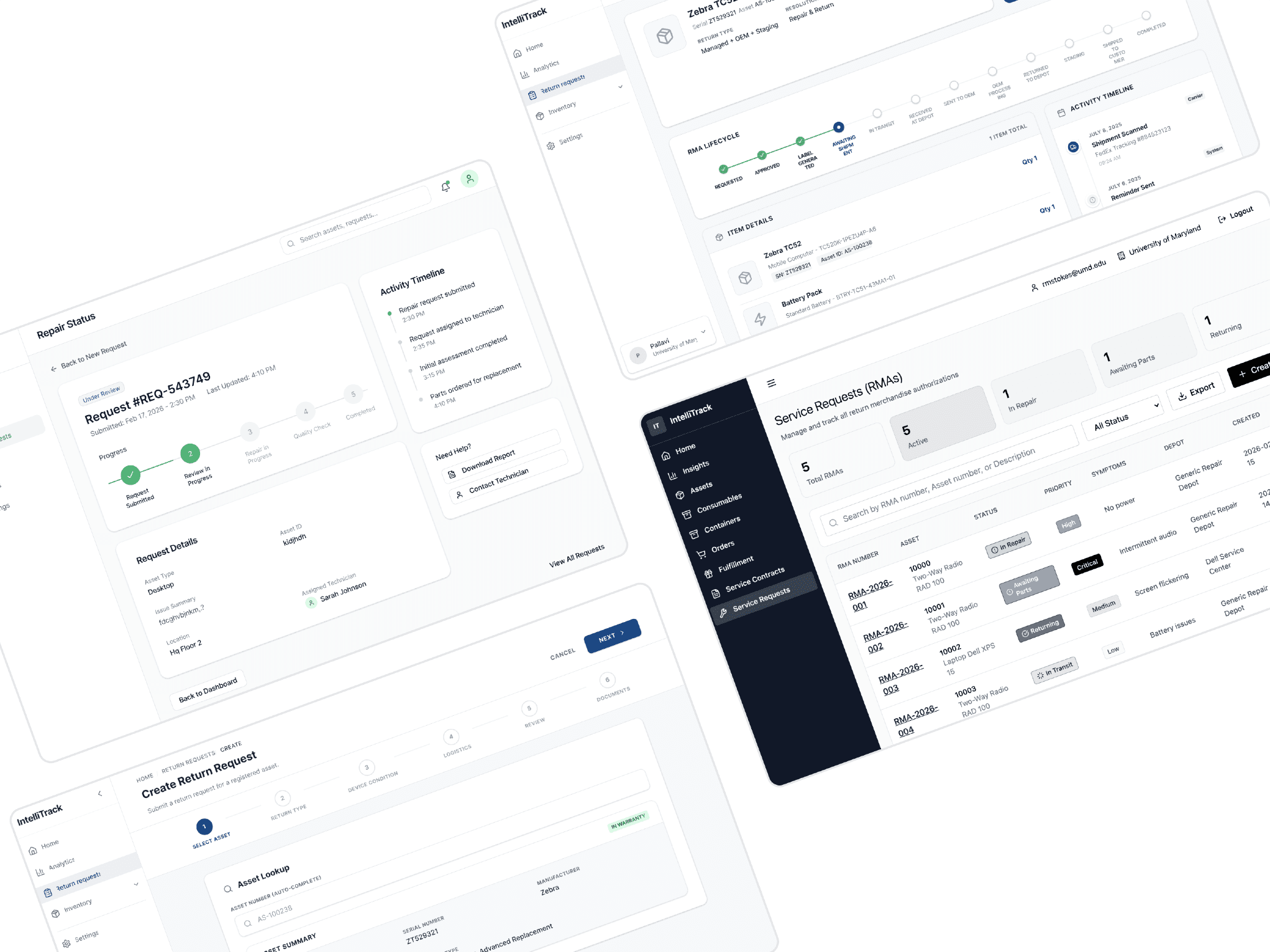
Redesigned for clearer visibility, guided interactions, and a smoother fit across supply chain touchpoints
AI-Assisted Rapid Workflow Iterations & Stakeholder Alignment Sessions
Rapid clickable prototyping and continuous stakeholder feedback over a month-long iterative process helped refine complex workflows and uncover emerging operational edge cases.
Building an MUI-Based Design System Foundation
Introduced a scalable Material UI component system while expanding IntelliTrack’s brand colors and typography through accessibility-focused enterprise design standards.
Applying Branded MUI Components to Finalized Workflows
Final workflow iterations were transformed into structured, development-ready interfaces using reusable Material UI patterns and branded components.