Identifying Pain Points
Leveraging my years of experience as Coordinator, I knew all the programs’ content by heart. My task wasn't just to update a page, but to redesign the information ecosystem. I set out to treat the website as a self-guided learning environment, aiming to:
Reduce Friction: Cut down on the repetitive inquiries draining staff resources.
Empower the User: Enable prospective students, faculty, and staff to find enrollment and policy data independently.
Bridge the Silos: Align the tone and content across multiple administrative departments.
Strong Design System: Utilize the capabilities of the robust NC State University digital design system. (Icons, components, etc.)
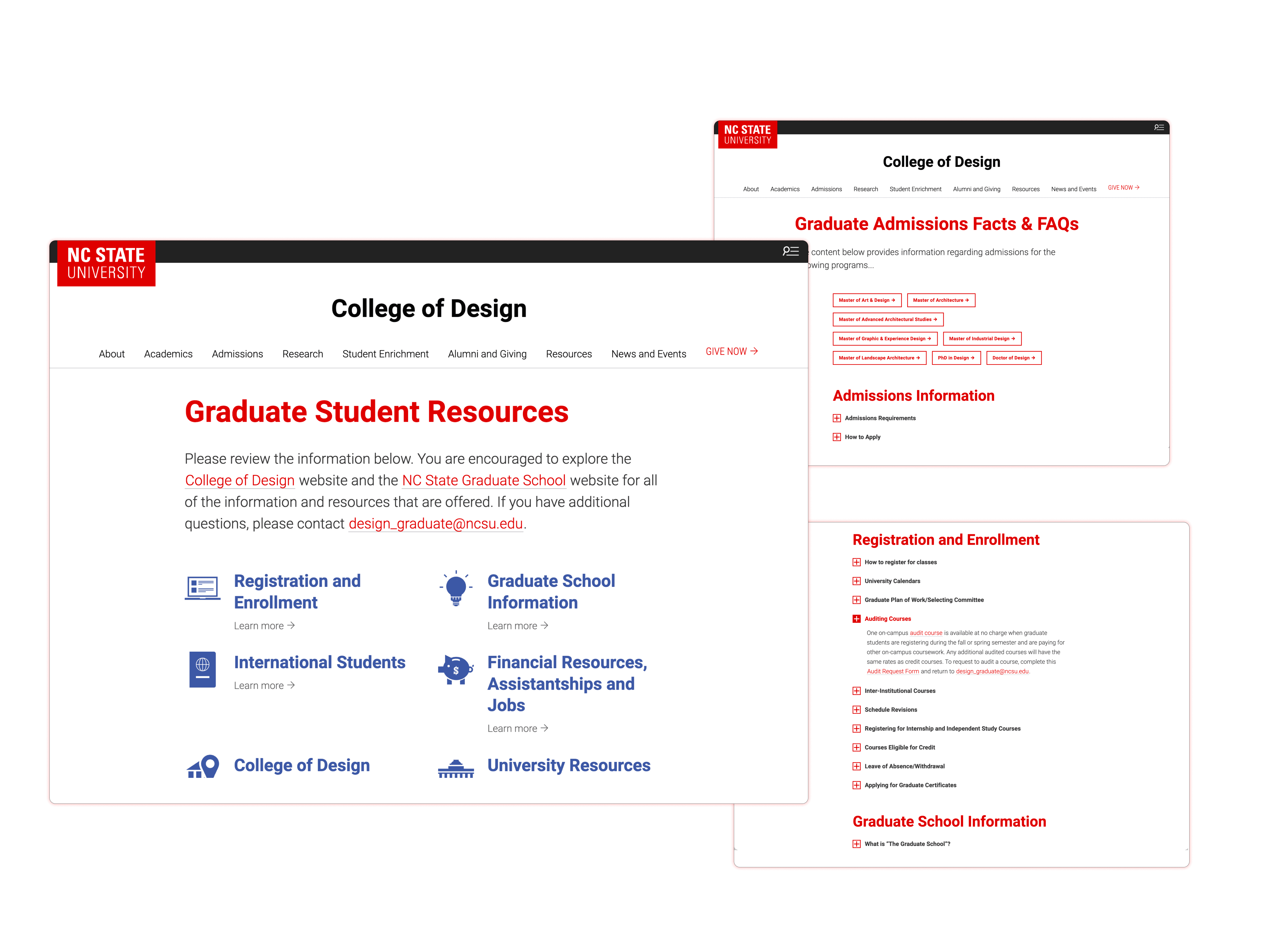
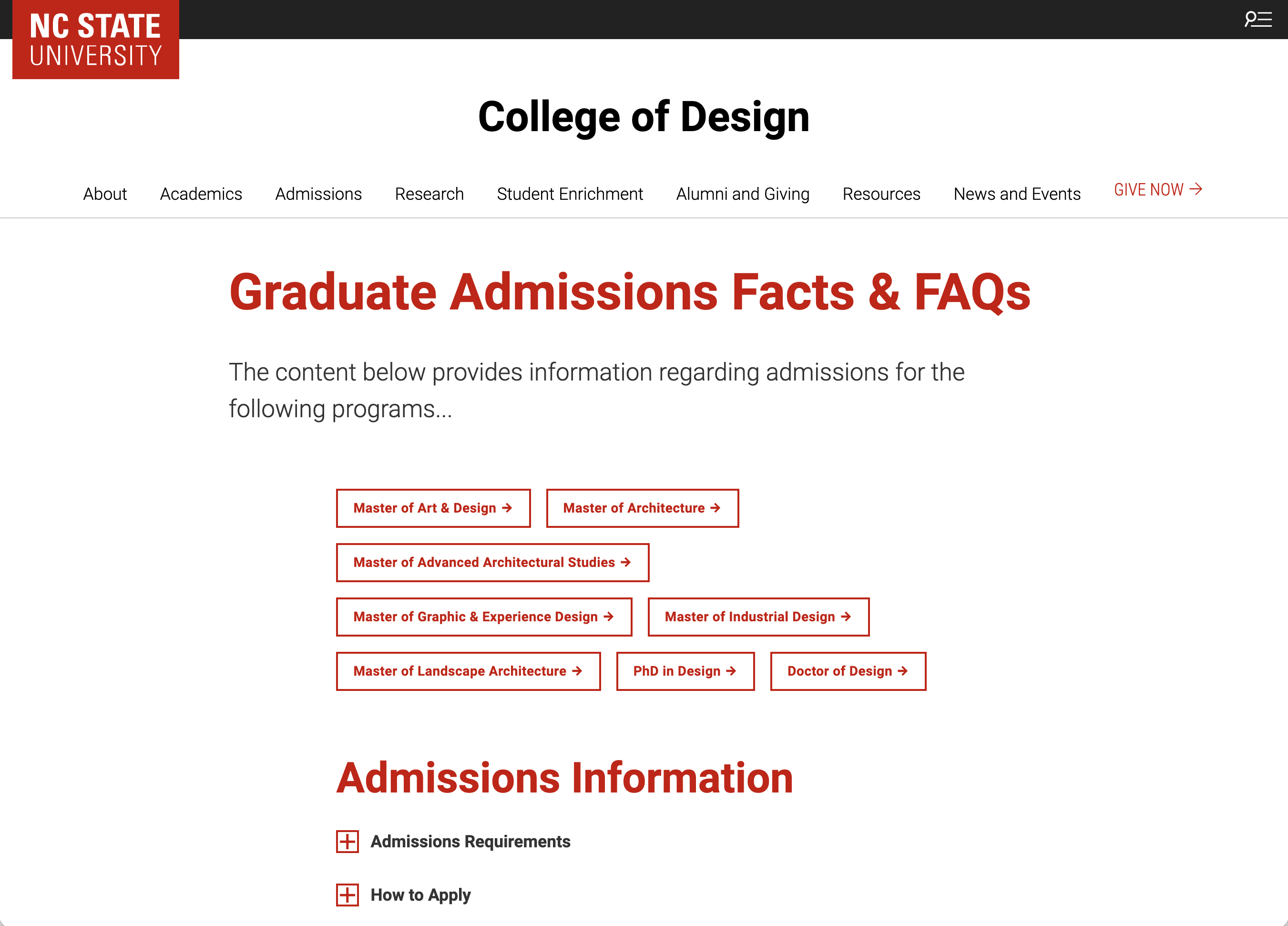
Graduate Admissions FAQs Page
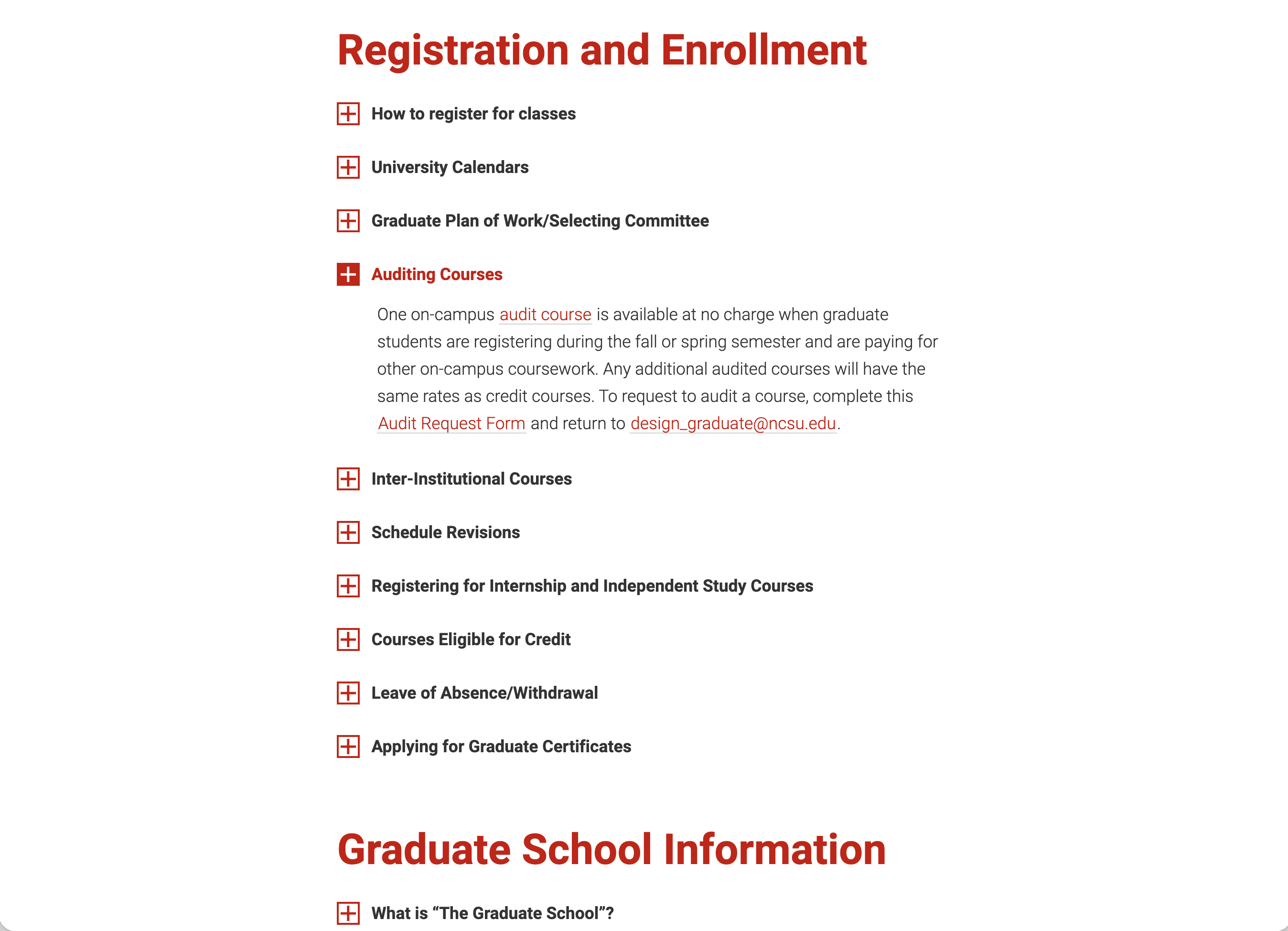
Graduate Student Resources Page
Audit: I conducted usability audits to map user journeys and identify where prospective students were getting lost.
Architecture: In collaboration with Program Directors and the Director of Communications, I designed an interactive FAQ and Resource Hub. I utilized instructional design principles like chunking and scaffolding to ensure complex policy data was digestible and searchable.
Content: I personally authored the content for every interactive element, ensuring the tone was both authoritative and accessible, bridging the gap between administrative speak and student needs.
The transformation was immediate. By shifting from a transactional site to a self-guided experience, we significantly reduced redundant inquiries and improved navigation clarity.
Systemic Impact: The hub created a consistent, easy-to-maintain ecosystem that empowered users to take action confidently and independently.
Proof of Concept: Perhaps the most telling metric of success is longevity. Three years later, these pages remain an active, primary source of information for the college, proving that human-centered design is a sustainable operational strategy.