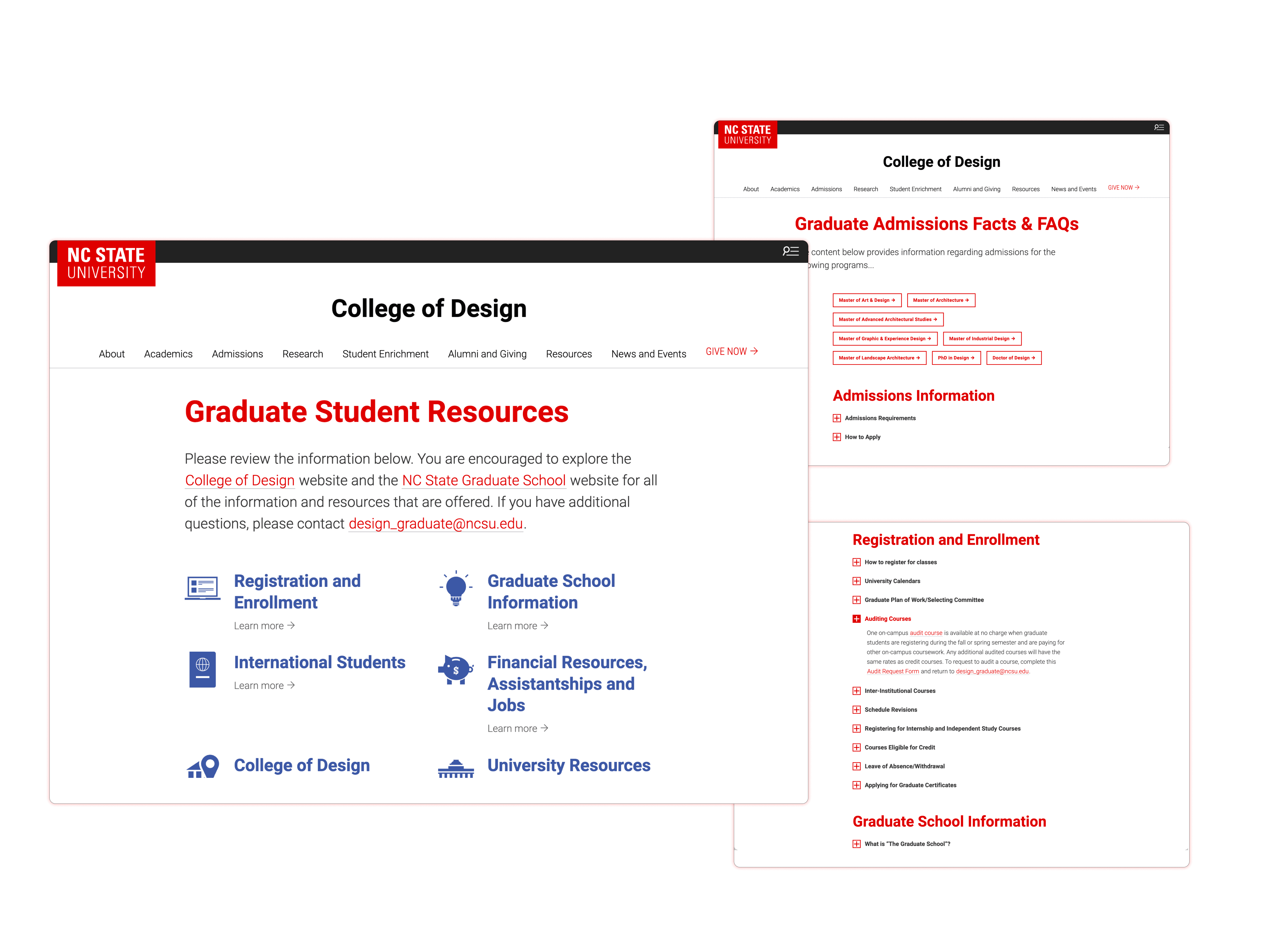
A Break from the Digital Studio
Teaching first-year designers requires a balance of studio mentorship and operational agility. Between the unpredictability of winter weather and the natural ebb of mid-semester energy, developed digital learning experiences to ensure that curriculum continuity never faltered. These lessons acted as a bridge, maintaining our creative momentum even when the physical studio is out of reach.
As we approach major project season, students need more than just technical skills; they need the professional vocabulary of documentation and the resilience of a critique-driven culture.
The transition from making to presenting is where many junior designers stumble. I identified two critical hurdles for my students:
Documentation Deficit: With so many tools today that allow designers to make countless choices so quickly, the importance of documenting process gets lost.
Critique Barrier: Without prior exposure to design feedback, the prospect of a formal critique can feel intimidating rather than constructive. My task was to move them from subjective 'I like it' comments toward objective, industry-standard analysis.
View The Lesson
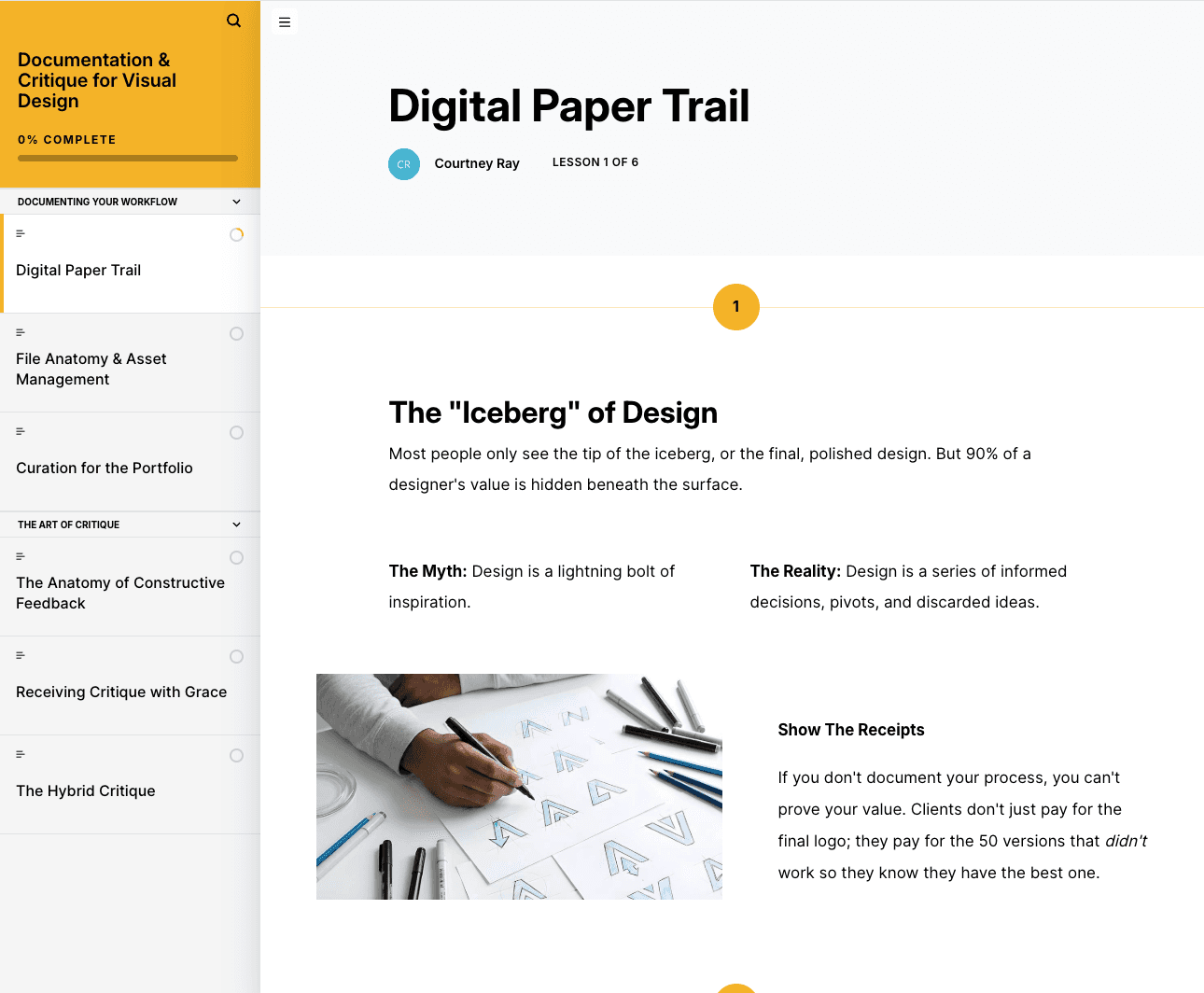
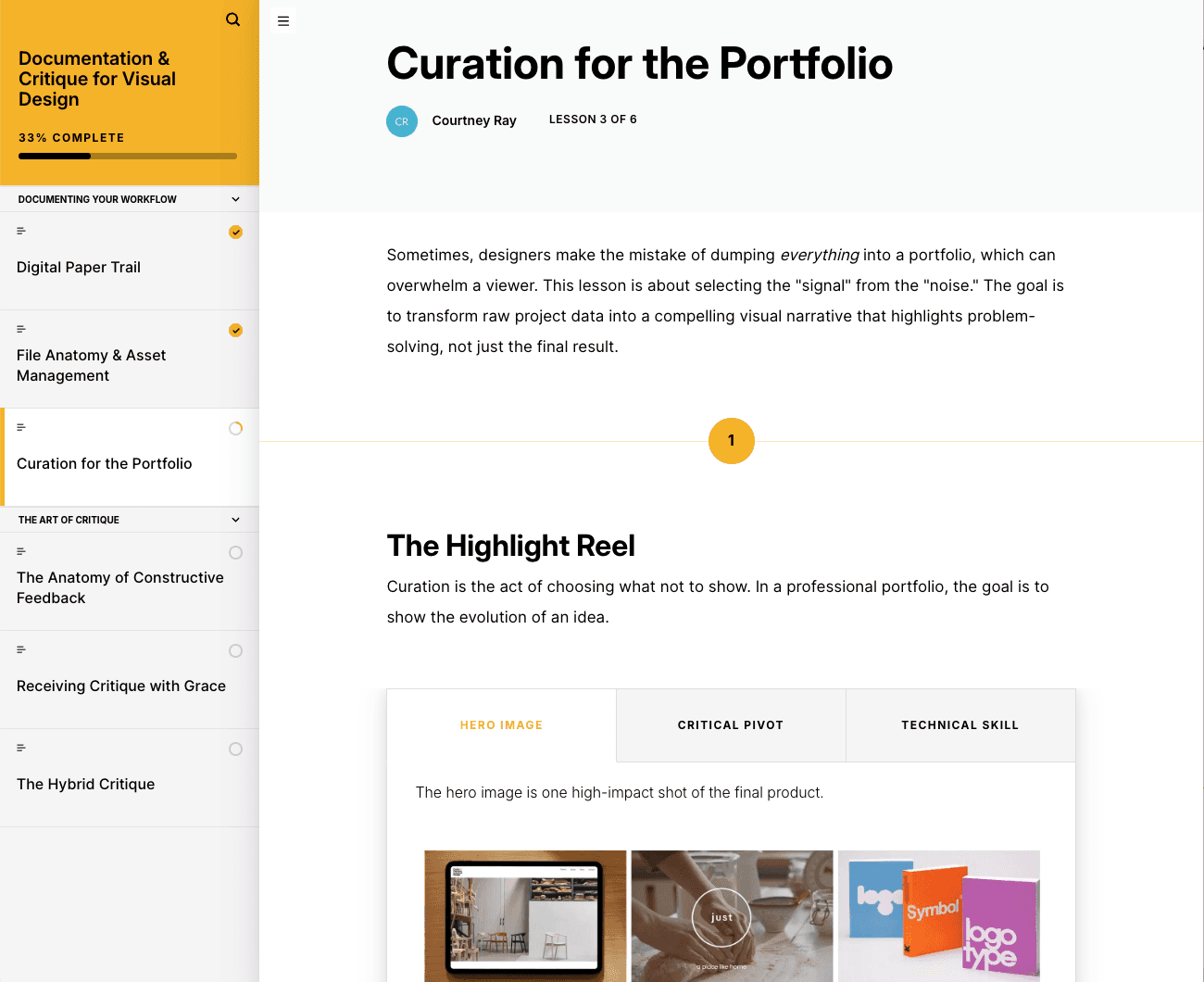
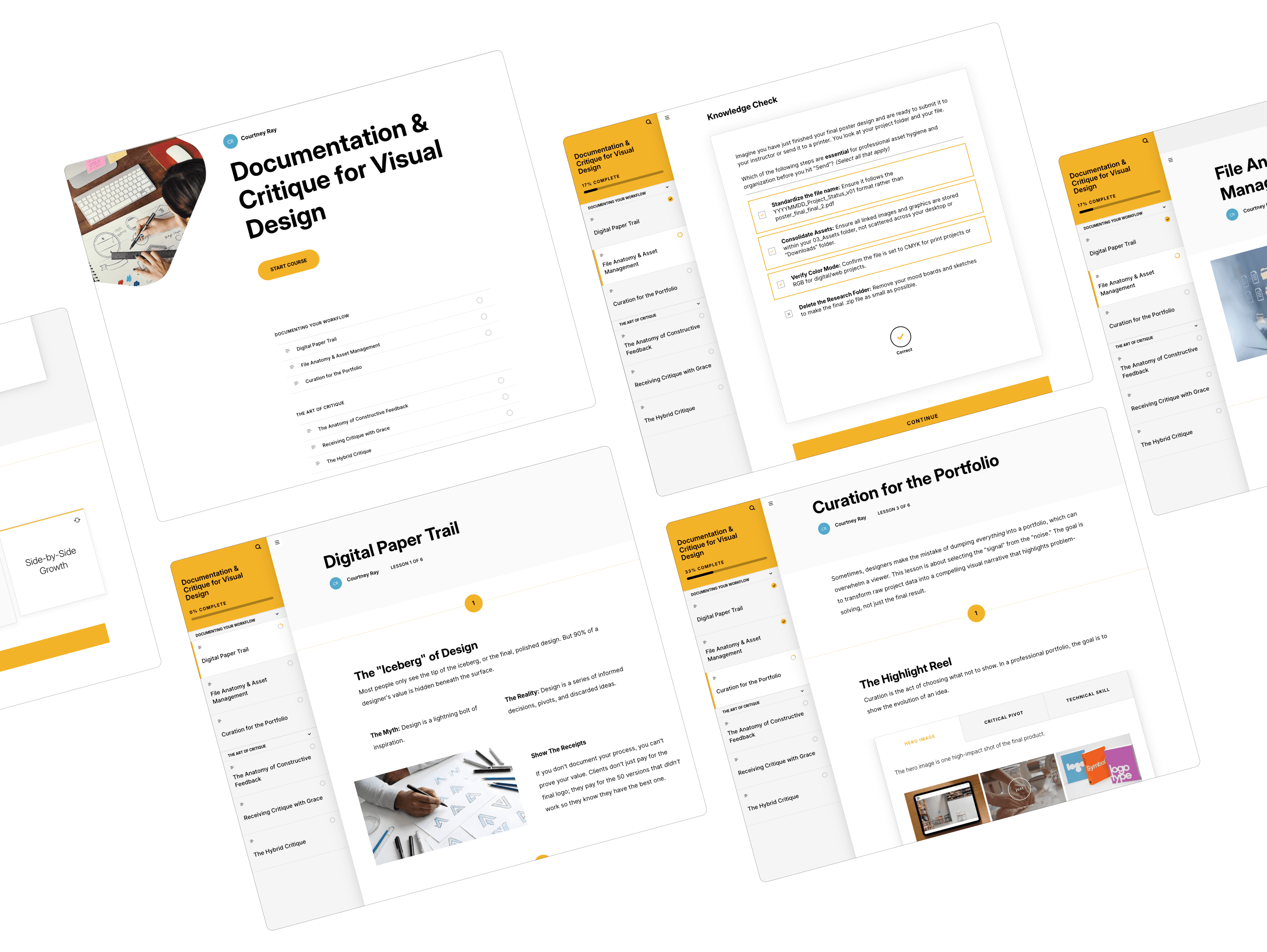
I designed this lesson to function as a digital creative director. I provided students with industry-standard expectations while empowering them to find a documentation workflow that suited their individual styles.
Interactive Guardrails: I utilized sorting activities and good vs. bad feedback blocks to help students categorize objective vs. subjective critique in real-time.
Fighting Cognitive Fatigue: Knowing that design theory can be dense, I applied UX principles to the lesson’s architecture—breaking content into digestible micro-learning modules with a focus on visual hierarchy and concise, high-impact copy.
Modeling the Work: The lesson itself acted as a living example of the principles taught, using clean layouts and intentional white space to reduce cognitive load and increase retention.
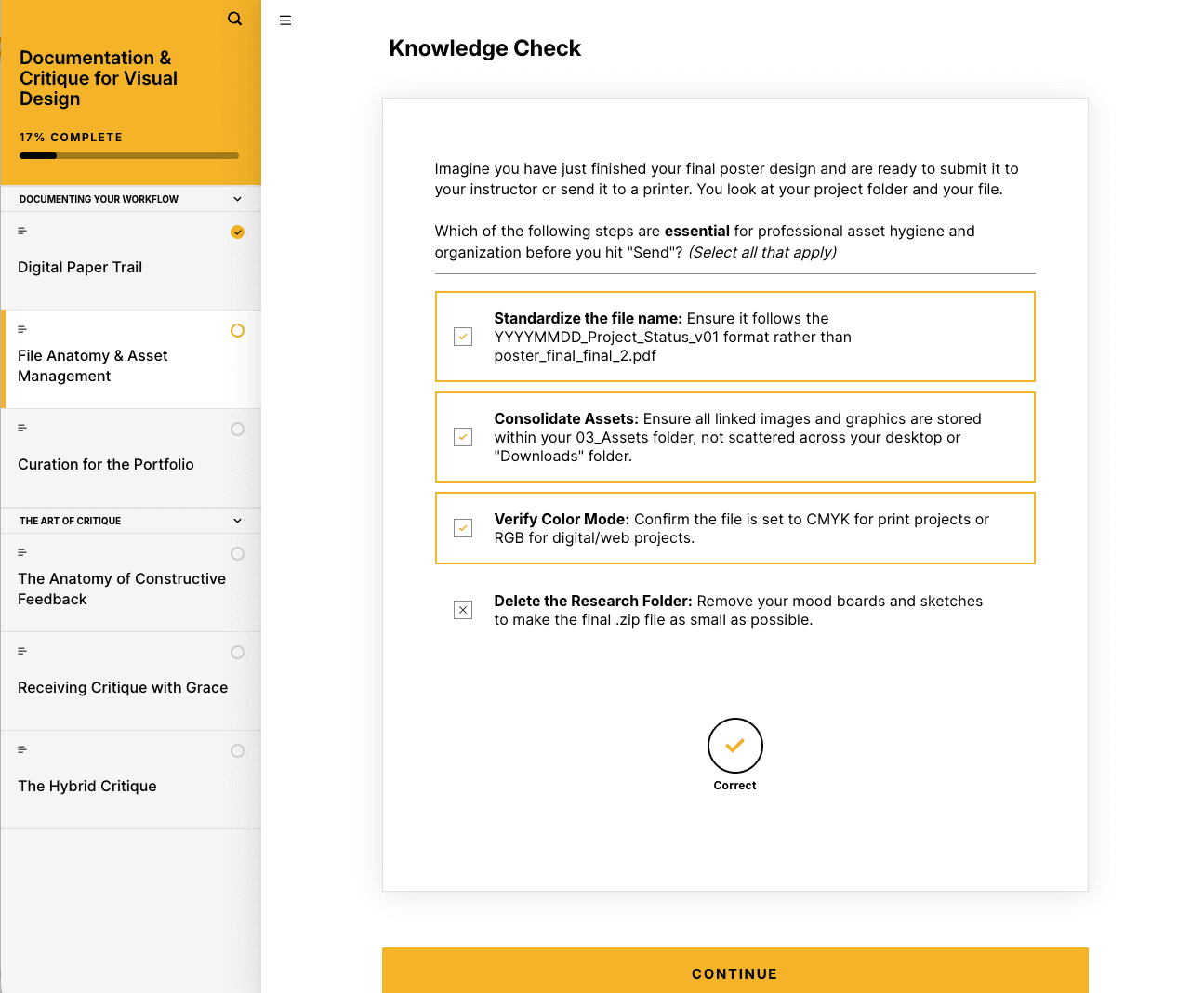
By taking the theory out of the physical studio and into a self-paced, low-pressure digital environment, students were able to internalize these soft skills before applying them in person.
100% of the class completed the lesson in under 20 min.
I did not receive any emails or messages asking for help in navigating the platform or confusion over a topic.
After Spring Break (March 2026) the students will put their knowledge to practice as they will be presenting their midterm projects and engaging in critique of their peers work.
I created another lesson to support students in a sophomore capstone course prepare to present their project with engaging and effective delivery methods.